
Cycling kit looks expensive and complicated when you are new to it. Standing in front of an online store for the first time, it can feel like you need to spend $1,000 before you are allowed to turn a pedal. You don't.
But you do need a few specific things, and getting them wrong costs you twice: once when you buy the wrong piece, and again when you replace it.
This guide covers the cycling kit you need when you are starting out, what you can skip, and how to get sizing right so you are not returning half your order.
Why cycling kit beats gym gear
Regular sports clothing is fine for a short spin around the block. Past 30 to 45 minutes, it starts to cause problems.
Cotton absorbs sweat and holds it against your skin, which leads to chafing on longer rides. It also takes forever to dry, so if you get caught in the rain or sweat through on a climb, you ride in wet fabric for the next hour. That is uncomfortable at best and a path to saddle sores at worst.
Cycling-specific kit fixes both problems. The fabrics wick moisture away from your skin and dry fast. The cuts are shaped for the riding position, so you are not fighting bunched fabric at the hips or a jersey that rides up and exposes your lower back mid-climb.
None of that requires spending a fortune. The gap between entry-level and high-end cycling kit is mostly in fabrics and finishes. The fundamentals work at any price. If you want the wider picture, our guide to what makes good cycling kit for Australian conditions goes further.
The cycling kit you actually need
Bib shorts come first
Bib shorts are the most important piece of cycling kit you will buy.
The difference between riding with bib shorts and without them compounds fast. At 60 minutes you notice it. At 90 minutes you feel it in the saddle. Past two hours without a pad, you are counting down the kilometres.
Bib shorts have a chamois (the padded insert) built in. You wear them directly against the skin, with no underwear underneath. The bib straps over your shoulders keep everything in place, so the shorts don't slide around and the pad stays where it needs to be.
The Core Bib Shorts are where most new riders start. They have a multi-density chamois, laser-cut bib straps that stay out of the way, 70mm silicone leg grippers (45mm on the women's version) and flatlock stitching to cut down chafing. At $119.99 they sit well below the usual price for this level of kit, and they cover everything from a coffee run to a long day out. There is a women's version too: browse women's bib shorts or men's bib shorts, and read our bib shorts buyer's guide if you want to compare tiers.
A cycling jersey
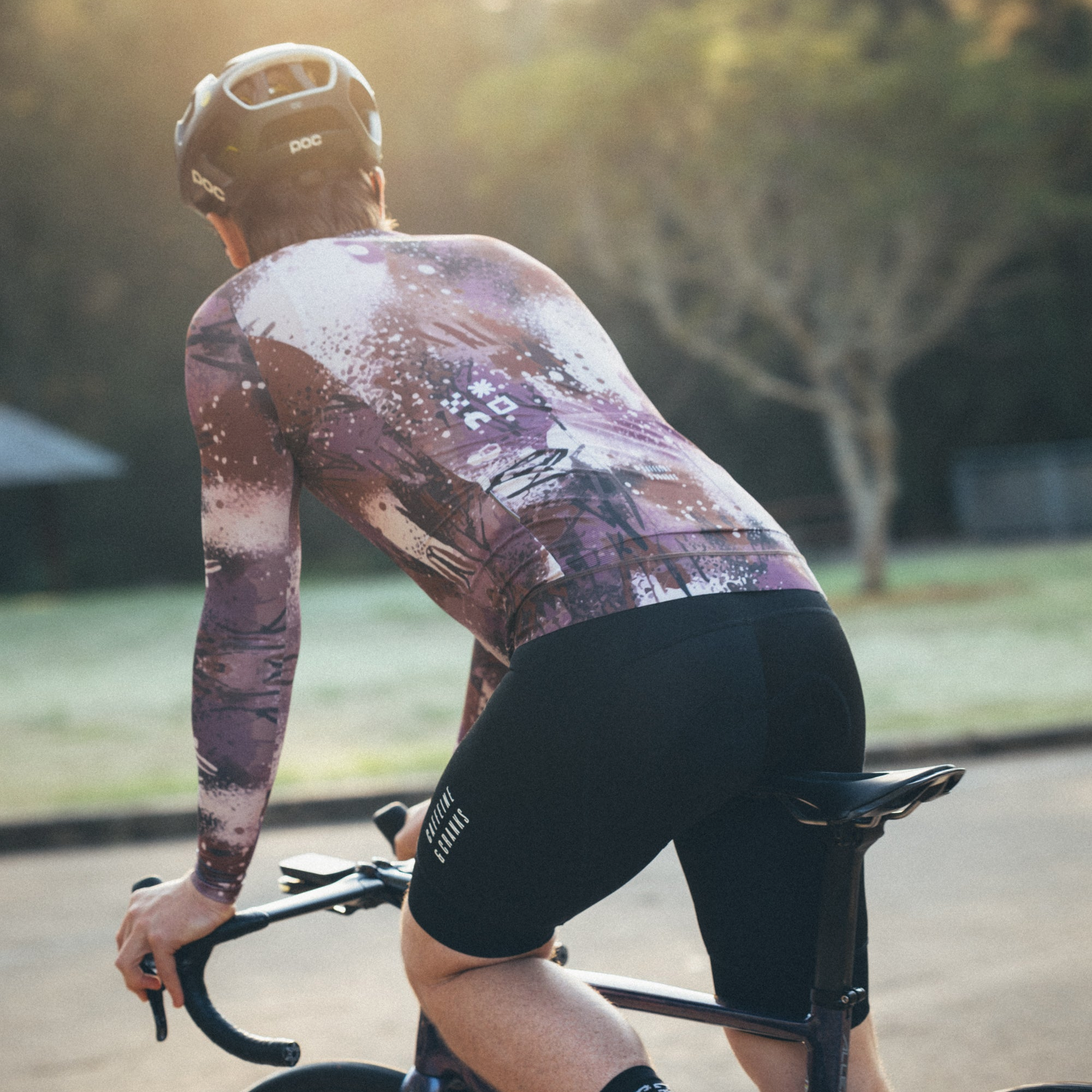
A jersey keeps you cool, carries your gear (the three rear pockets hold food, a spare tube and your phone) and stays put in the riding position. A regular t-shirt bunches up and flaps at speed. A jersey doesn't.
Caffeine and Cranks jerseys are cut race fit. That means snug and aerodynamic when you are in position on the bike, sitting close to the body without loose fabric. It is the intended fit for performance riding.
Prefer more room? Size up one for a relaxed fit that is still cycling-specific. Size up two for a noticeably roomier feel. If you are between sizes, check the sizing guide before ordering. Two minutes now saves a return later. Browse men's jerseys or women's jerseys when you are ready.
Cycling socks
Cycling socks are shorter and more structured than running socks, and they sit inside cycling shoes without bunching. They also breathe better than cotton.
You don't need to spend much here. A few pairs of cycling socks cover a week of riding without any laundry juggling.
Shoes and cleats can wait
Clipless pedals and cycling shoes make a real difference to pedalling efficiency, but they are not essential on day one. Plenty of riders spend months on flat pedals and enjoy it just as much.
If you are still working out whether you will stick with cycling, start with the shoes you have. Cycling kit is easier to sort once you know you are committed.
What to skip at first
Arm and leg warmers
Warmers earn their place on days when you start cold and heat up mid-ride. They are not essential for a beginner. A base layer under your jersey handles most conditions and is more versatile across the season.
Overshoes
Useful for wet and cold conditions. Unnecessary if you mostly ride on dry days or in warmer months.
Aero everything
Aero helmets, skin suits and deep-section wheels all matter at race pace. None of it matters at 25 km/h on a Sunday morning. Get the basics right first.
Getting cycling kit sizing right
Cycling kit sizing runs differently from regular clothing. Race cut is tighter than you might expect, and it is meant to be. It sits close to the body so there is no loose fabric creating drag or bunching when you are bent over the bars.
A few practical notes:
Jerseys: If you are between two sizes and ride in an aggressive position, go with your normal size for a close, aero fit. If you prefer not to feel the fabric against your skin on every pedal stroke, go up one. Our cycling jersey size guide shows how to measure.
Bib shorts: These should feel snug through the legs and torso. The chamois needs to sit in the right place without moving. If a pair feels restrictive when you are standing, try the next size up. Going too large lets the chamois shift around, which causes the friction you were trying to avoid.
General rule: check the size chart for each item. Fabrics stretch differently, and waist measurement is more reliable than your usual clothing size.
Building your cycling kit over time
You don't need everything at once. A practical starting kit looks like this:
- Two pairs of bib shorts, so you can wash one and ride in the other
- Two or three jerseys
- A few pairs of cycling socks
- A base layer if you are riding in cool conditions
From there, add pieces based on where and when you ride. Arm warmers for shoulder-season mornings, a gilet for windy days, and a shell only if you ride through sustained rain. Our layering guide shows what to add at each temperature.
The Caffeine and Cranks range keeps this simple. Everything shares the same fit and cut, so mixing pieces across seasons works without thinking about it.
Mistakes to avoid with your first cycling kit
Buying kit that is too loose. The most common beginner mistake is ordering cycling kit in a regular clothing size. The cut is intentionally fitted. A jersey that looks too small on a hanger fits correctly in the riding position.
Wearing underwear under bib shorts. The chamois works against bare skin. Underwear bunches fabric in the wrong places and adds friction. It feels odd at first, but skipping it is the right call.
Starting with cheap shorts. Everything else can be entry-level and work fine. Bib shorts are where buying something decent from the start pays off, because a poor chamois makes long rides miserable before you have really started.
Buying everything at once. Start with the essentials. Most riders find they need different things than they expected after a few months of regular riding. Save the specialist pieces until you know what you use.
Looking after your cycling kit
Cycling kit lasts longer with proper care. Wash it inside out in cold water, air dry rather than tumble dry, and skip the fabric softener, which breaks down chamois material over time. The full routine is in our guide to washing your cycling kit.
The short version
Get the bib shorts first. Nothing else matters as much for comfort on the bike. Add a jersey that suits how you ride and a few pairs of socks, and you are sorted for most conditions. Build from there based on what you actually ride.
There is no prize for the most expensive cycling kit in the bunch. There is also no shame in knowing what you need and buying it at a fair price.
Read more
Bib shorts vs cycling shorts — an honest breakdown of the differences, who each type suits, and which one is actually worth buying for Australian riders in 2026.
Canberra is the only Australian capital that gets genuinely cold. Minus three at 6am in July isn't unusual. Frost on the grass across most of the inner suburbs for six or seven weeks of the year. T...