
Cycling in Canberra Winter: A Local's Guide to Cold Rides
Canberra is the only Australian capital that gets genuinely cold. Minus three at 6am in July isn't unusual. Frost on the grass across most of the inner suburbs for six or seven weeks of the year. The kind of cold that turns a poorly-dressed bunch ride into a genuinely miserable experience, and the kind of cold that most cycling clothing advice written for Australian conditions completely fails to cover.
This is a Canberra-specific guide to cold-weather cycling. What the conditions actually look like, what kit you need to handle them, and where to ride when the temperature is sitting on zero and the sun is still twenty minutes away.
What Canberra winter actually looks like
Canberra averages 1°C overnight minimums across June, July and August. The coldest morning each year typically hits between minus 5 and minus 8. Frost forms regularly across Tuggeranong, Belconnen, Gungahlin and the Lake Burley Griffin flats. By mid-morning the temperature climbs into single digits, often reaching 12 to 15°C on a clear day.
This creates three specific cycling challenges that riders in Sydney or Brisbane don't face:
Frozen dew on roads. Shaded sections of cycle paths and quiet roads through the inner north can hold ice patches until 9 or 10am. Parkes Way, the path around Lake Burley Griffin, and the bike lanes through Campbell and Reid all have spots where black ice forms in June and July. You have to read the road differently in Canberra winter.
Actual wind chill. Canberra's open terrain and lack of coastal moderation means wind chill bites harder here than other Australian capitals. A 5°C ride with a 20 km/h northerly is a genuinely cold ride. The wind is doing more work against you than the air temperature suggests.
A long pre-sunrise window. Sunrise in June hits around 7:10am. If you're riding in a bunch that leaves at 6am, you're riding in darkness for an hour and then dawn light for another thirty minutes. This changes what kit you need, specifically around reflectivity and hand warmth.
The Canberra winter kit system
What works for a Sydney winter doesn't work in Canberra. The baseline assumption needs to shift from "layered for cold mornings, strip down as it warms up" to "properly warm from the start, and trust the kit to ventilate when the sun gets up."
For reference, the main winter cycling clothing guide covers the three-piece layering system that works for most of Australia. Canberra needs additions to that baseline.
The core pieces
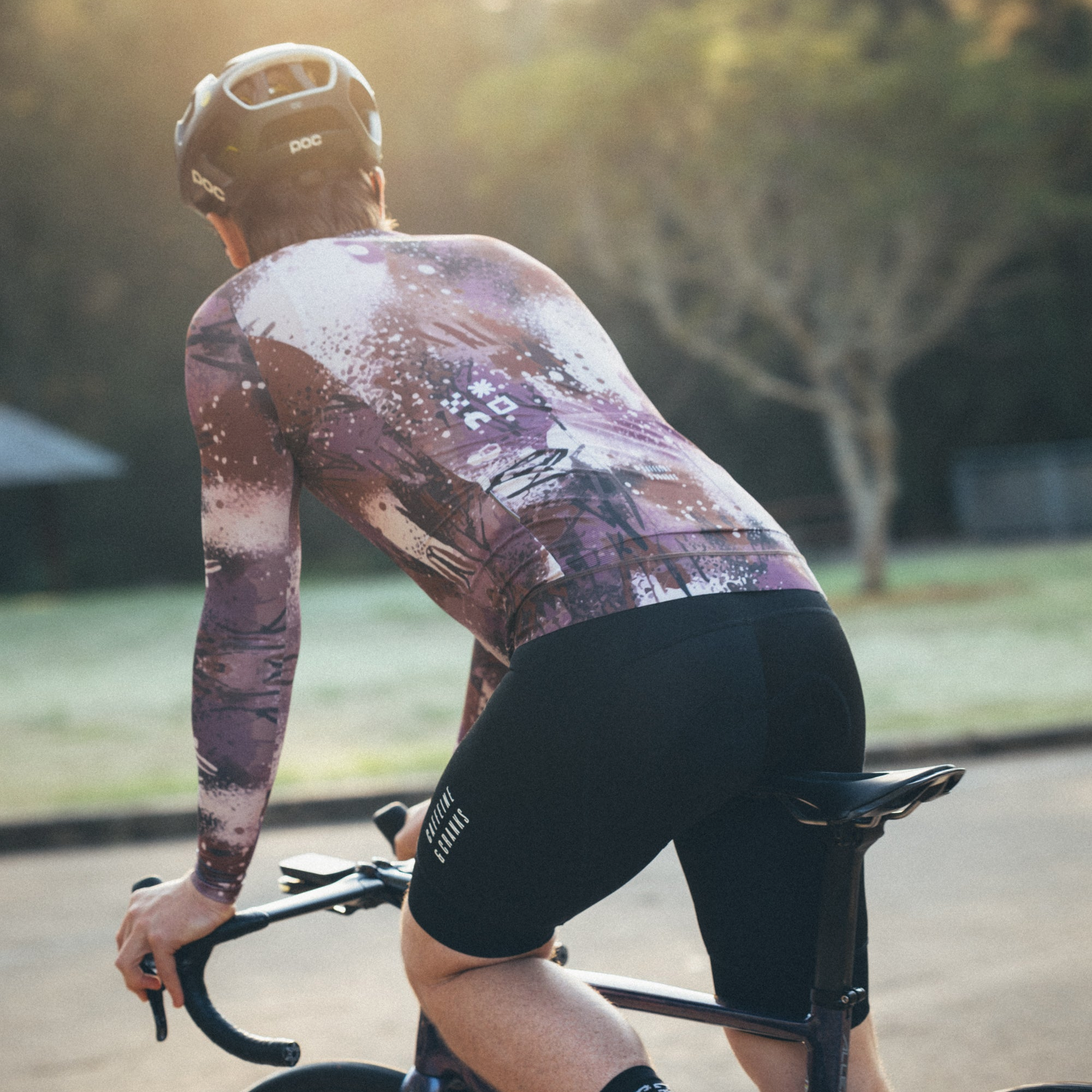
Thermal jersey (essential). A midweight thermal with a brushed fleece inner is non-negotiable below 8°C. The Core Thermal Jersey is built for this exact range, with a temperature rating down to 5°C. For genuinely cold mornings, layer a technical base underneath.
Bib tights, not leg warmers. This is where Canberra diverges from the rest of Australia. In Sydney or Melbourne, leg warmers over summer bibs are usually the smarter call because the day warms up. In Canberra on a cold morning, bib tights make more sense. The Thermal Bib Tights with windproof front panels handle frost-at-departure temperatures in a way leg warmers don't.
Gilet over thermal jersey. On rides where the temperature is 0 to 3°C at the start, a Core Gilet over the thermal jersey adds the windproof chest panel that makes the difference between riding and suffering. The mesh back means it vents properly when you warm up on the climbs into Cooleman Ridge or up Mt Ainslie.
The accessories that actually matter in Canberra
These are the pieces that separate "comfortable Canberra winter ride" from "abandoning the bike at 15km because I can't feel my hands."
Winter gloves. Not full-finger summer gloves with a bit of thermal. Proper winter cycling gloves designed for 0 to 8°C. This is the single most important Canberra-specific accessory. Your hands will fail before any other part of your body.
Neck warmer or buff. A thermal neckwarmer covering throat and upper chest prevents the cold descending-air effect that makes early morning descents in the Brindabellas genuinely dangerous at speed. Pull it up over your mouth when the temperature drops below 2°C to avoid cold-air asthma.
Shoe covers. Your feet are the first thing to fail on a Canberra morning. Cold air pulls through cycling shoe vents and the thin lining offers no protection. Neoprene shoe covers or toe warmers add 10 to 15°C of perceived warmth at the feet.
Thermal skull cap under the helmet. Not optional below 5°C. Most body heat escapes through the head. A thin thermal cap or merino cap under the helmet changes how long you can ride comfortably by a significant margin.
Clear or yellow lens glasses. Not sunglasses. Cold air makes eyes water, which is unpleasant and dangerous at speed. Clear or yellow-tinted cycling glasses solve this and help with the transition from pre-dawn to morning light.
Where to ride when it's cold
Canberra's cycling infrastructure is genuinely world-class, and winter riding actually benefits from some of the city's lesser-used routes. Some specific recommendations for cold mornings:
Lake Burley Griffin loop. The classic. 35km fully-separated cycle path around the lake, flat enough that you generate steady heat rather than getting sweaty on climbs and then cold on descents. Start at Commonwealth Park or the Kingston foreshore. Best ridden from 7:30am onwards once the sun has hit the eastern banks.
Centenary Trail. Longer ride, 145km full loop but most riders do segments. The northern section through Mulligan's Flat and Hall is a proper winter ride, quiet and well-marked, with multiple access points. The southern section through Tuggeranong and around Tidbinbilla adds real distance and climbing.
Cotter Road out and back. Popular Saturday morning bunch ride. Rolling terrain, good visibility, reasonable traffic speeds. Best for group rides where you can share wind and share warmth.
Mt Ainslie loop. If you want the climb, this is the iconic Canberra ride. The climb itself warms you up fast, the descent is short, and the views of a frost-covered Canberra at sunrise are worth the cold start.
For the full local route breakdown, the existing Canberra cycling routes guide covers the five essential rides in more detail.
Common Canberra winter cycling mistakes
A few patterns that come up over and over with riders new to Canberra winters:
Treating it like Sydney winter. A Sydney winter kit does not work in Canberra. The difference between 8°C and 0°C is not a minor increment. Invest in a proper Canberra-grade winter setup, or accept that you'll be riding less between June and August.
Skipping the head and feet. Riders will spend big money on a thermal jersey and bib tights, then wear summer socks and no cap under the helmet. Heat loss from feet and head will undo everything the core kit is doing. Spend $80 on a thermal cap and decent socks and the rest of the kit suddenly works twice as well.
Riding too early on frost mornings. If it's been below zero overnight, wait until 8:30 or 9am for the shaded sections to de-frost. Black ice on the northern side of Parkes Way has ended more Canberra winter rides than any kit failure.
Not adjusting for wind direction. A southerly in Canberra is significantly colder than a northerly. Plan the route so you finish with the wind, not into it, when you're at your coldest and most tired.
Using summer tyre pressure. Cold air is denser, tyres run harder, and grip on cold tarmac is lower. Drop pressure by 5 to 10 psi in winter, particularly on descents.
The rider who actually wins at Canberra winter
The pattern among riders who ride year-round in Canberra without complaining about the cold: they've stopped treating winter kit as an add-on and treat it as a standalone setup. A thermal jersey, thermal bib tights, gilet, winter gloves, thermal cap, neck warmer and shoe covers sitting in a winter drawer, ready to go. No thinking, no layering calculations, no compromise pieces.
The overall cost of this kit adds up, but it's genuinely cheaper than the alternative of owning a road bike you don't ride for four months of the year. The riders who ride all winter are faster in October than the riders who stopped in May. That fitness gap is hard to close in spring.
Where to start
If you're building a Canberra winter setup from nothing, the priority order:
- Thermal jersey and thermal bib tights. The foundation.
- Core Gilet. The temperature multiplier.
- Winter gloves and thermal cap. The small but critical pieces.
- Neck warmer and shoe covers. For the coldest mornings.
Everything else is supplementary. Get these right and a Canberra winter looks after itself.
The full winter cycling collection covers the men's range, and the women's winter kit mirrors it with female-specific fit. If you want the bigger picture on layering and kit selection, the main winter guide covers the underlying system that this Canberra-specific advice builds on.
Read more
Cycling kit for beginners in Australia: the bib shorts, jersey and socks to buy first, what to skip, and how to get race-fit sizing right the first time.
The coffee stop isn't a detour. It's built into how cycling culture works, and understanding it tells you something real about the sport itself.