
Long Sleeve Cycling Jersey vs Thermal: Which Do You Actually Need?
Long sleeve cycling jerseys get bundled together in most online stores like they're all doing the same job. They're not. A lightweight long sleeve for 18°C autumn mornings is a completely different garment to a midweight thermal built for 6°C dawn patrols, and buying the wrong one means either freezing or cooking for the entire ride.
This post covers the real difference between a standard long sleeve cycling jersey and a thermal cycling jersey, when each one is the right call, and why most Australian riders actually need a thermal rather than a traditional long sleeve.
The problem with how long sleeve jerseys get sold
Go to most cycling retailers and you'll see "long sleeve jersey" used as a single category. What's in there is wildly inconsistent. Some are lightweight performance jerseys with the exact same fabric as summer pieces, just extended at the arms. Others are brushed-back thermals built for genuine cold. The price differences are huge, the performance differences are bigger, and the category label tells you nothing useful.
The riders who end up with the wrong one usually made a reasonable assumption. They wanted warmth, saw "long sleeve," and bought. Then on the first cold morning it didn't deliver. Or they wanted coverage from sun or wind, bought a thermal, and overheated so badly they couldn't wear it after September.
The fix is understanding which type solves which problem.
The two jerseys are built for different conditions
Lightweight long sleeve jersey
A standard long sleeve jersey is essentially a summer jersey with extended arms. Same midweight technical fabric. Same moisture-wicking. Same fit. The only difference is the sleeve length. These are built for 14°C to 22°C conditions, which in Australia covers early autumn mornings, late spring evenings, or cool summer dawns in Tasmania and the southern states.
What this jersey actually does:
- Sun protection on long summer rides when you don't want zinc on your arms
- Coverage on cool but not cold mornings where arm warmers feel excessive
- A touch of warmth without sweating
What it doesn't do: keep you warm below about 14°C. Below that temperature, the fabric isn't thick enough to trap body heat, and you'll end up with cold arms and a cold core even on a hard effort.
Thermal cycling jersey
A thermal jersey has a brushed fleece inner layer that traps warm air against your skin. The outer shell handles wind, the inner fleece handles warmth, and the whole thing typically runs 8 to 10 degrees warmer than a standard jersey. Proper thermal jerseys are built for 5°C to 15°C, which covers the vast majority of actual Australian winter riding.
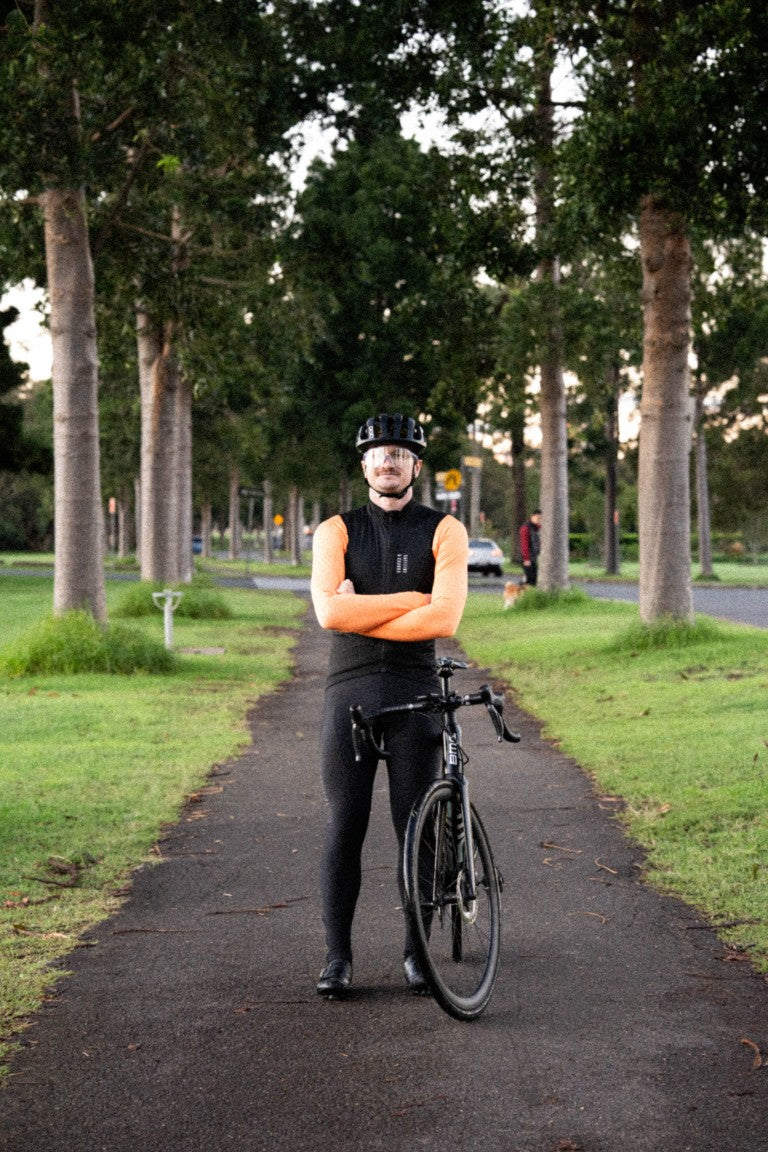
The Core Thermal Jersey is the example here. Midweight thermal lining, UPF35+ built in, three rear pockets and reflective details for dawn rides. Same race fit as the summer range, so it layers easily under a gilet without bunching. There's a women's thermal option in a female-specific fit, and a more performance-oriented Pinnacle Thermal with a closer race cut.
The thermal is what most Australian riders think they're buying when they go looking for a "long sleeve cycling jersey" in May or June.
When does each one make sense?
Choose a standard long sleeve jersey when:
- You ride in consistently mild conditions between 14°C and 22°C
- You want sun coverage on summer rides without a separate base layer
- You mostly ride in Brisbane, the Gold Coast, or northern NSW where genuine cold is rare
- You already have a thermal and need something lighter for shoulder seasons
Choose a thermal cycling jersey when:
- You ride year-round and regularly see temperatures under 12°C
- You're in Sydney, Melbourne, Canberra, Adelaide, or anywhere that gets proper winter
- Early morning rides (pre-7am) are part of your regular routine, even in spring and autumn
- You want one jersey that handles most of winter without needing a rain jacket over the top
For most Australian riders doing bunch rides, weekend rides, or any kind of serious training, the thermal is the more useful piece. A standard long sleeve jersey fills a narrower window, us option worth knowing about: a short sleeve summer jersey plus thermal arm warmers.
This gives you flexibility the dedicated long sleeve jerseys can't match. On a variable-temperature ride (cold start, warm finish), you can peel the arm warmers off mid-ride and stash them in a pocket. The jersey itself still works on its own when the day warms up. One summer jersey plus arm warmers covers roughly 12°C to 25°C if you're willing to layer and unlayer as conditions change.
The catch: on genuinely cold starts under 10°C, arm warmers aren't enough. The core needs thermal insulation, and a short sleeve summer jersey underneath doesn't provide that. This is where a true thermal earns its place.
For a full breakdown of layering systems for Australian winter rides, the winter cycling clothing guide covers the three-piece system most riders actually need.
What to look for in a thermal jersey
Not every jersey labelled "thermal" is the same. The cheap ones skip key features and you feel the difference on a cold bunch ride. What matters:
Brushed fleece inner. This is the actual thermal layer. Run your hand inside the jersey. If it feels smooth like a summer jersey, it's not a real thermal. Proper winter jerseys feel soft and fuzzy inside.
Temperature rating. Look for a stated climate range. Good thermals specify 5°C to 15°C or similar. If there's no rating, you're guessing.
Full-length zip. Essential for temperature regulation. On a climb, unzip halfway and dump heat. At the top, zip up for the descent. A half-zip thermal jersey is a compromise you don't want to make in winter.
Three rear pockets. Winter rides mean more stuff: arm warmers you've peeled off, a gilet you stashed, spare gloves, more food because the body burns more in cold. Three pockets is non-negotiable.
Reflective detailing. Dawn rides in winter means starting in low light. Reflective hits on the sleeves, back and waistband make a real difference at 6:30am in July.
Race fit, not relaxed fit. Thermal works by trapping warm air close to the skin. A loose thermal jersey lets warm air escape and cold air in at the cuffs. Snug is warm. Baggy is cold.
A note on fit (because winter fit matters)
All Caffeine and Cranks jerseys including the thermals are cut to race fit by default. That means snug when you're in the drops, no flapping at speed, close to the body. For winter this fit isn't optional, it's functional. The close cut is what traps the warm air and keeps the jersey working as insulation.
If you normally size up one in summer for a more relaxed feel, reconsider for winter. A size up in thermal kit means air gets in at the cuffs and waistband, which completely defeats the purpose. Stay true to size for thermal jerseys, or if you're between sizes, lean smaller rather than larger.
The sizing guide has the full breakdown of race fit vs relaxed and how C&C sizing compares across ranges.
So what should you actually buy?
For most Australian riders asking the question "do I need a long sleeve cycling jersey," the honest answer is: you probably need a thermal. Here's the practical test.
Do you ride in autumn, winter or spring? Get a thermal.
Do you only ride in summer and want extra sun coverage? A standard long sleeve works, or a short sleeve with arm warmers gives you more flexibility.
Do you already own a thermal and want something lighter for shoulder seasons? Then yes, a standard long sleeve fills a specific gap.
Most riders overestimate how often they'll wear a lightweight long sleeve and underestimate how often they'll wear a thermal. A thermal jersey in the drawer gets worn from April to September in most of the country. A lightweight long sleeve gets worn maybe six weeks a year.
Start with the thermal. It's the workhorse.
Where to start
The full winter cycling collection is organised around the thermal-first approach, with the Core Thermal Jersey as the everyday option and the Pinnacle Thermal range for riders who want a closer race cut. Women's options sit in the women's winter kit collection, all cut for the female form rather than scaled down from men's patterns.
If you're already into winter and want to build out the full layering system, the main winter clothing guide covers the three-piece kit that handles most Australian conditions.
Read more
Bib shorts vs cycling shorts in Australia: what each one is, when waistband shorts make sense, and why most riders move to bibs for longer rides.
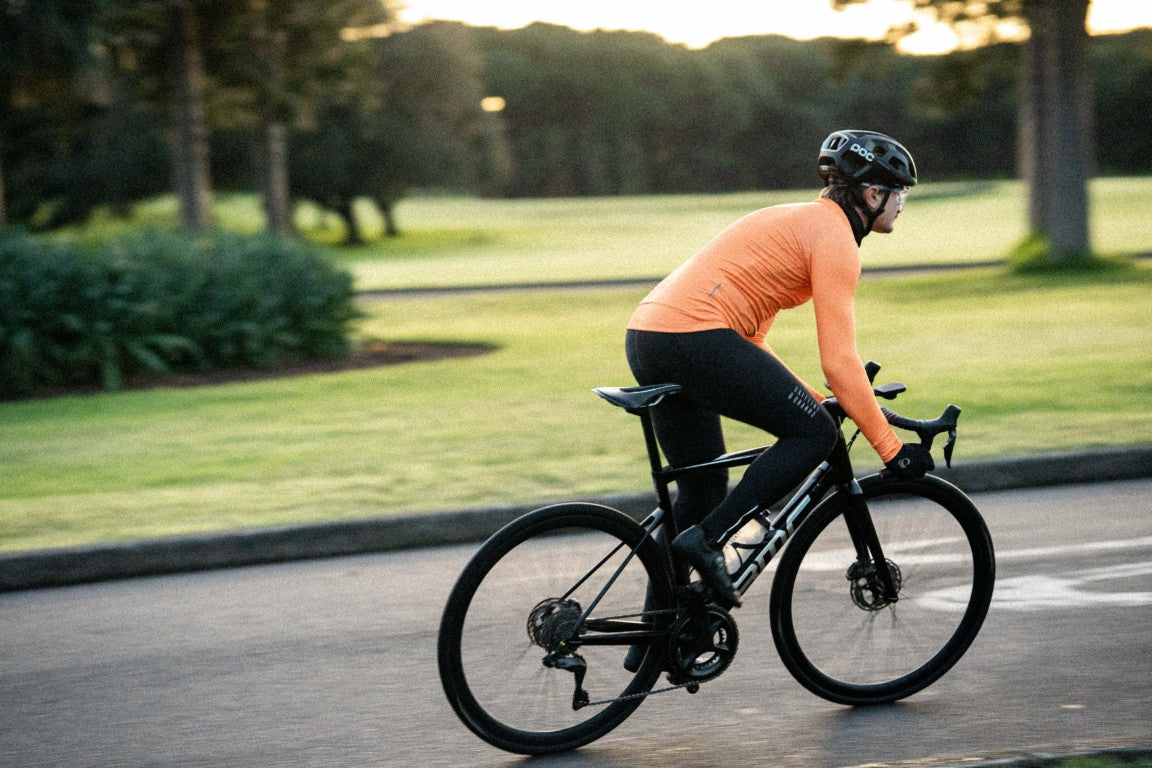
Australian winter is a funny beast on the bike. The forecast says 8 degrees at 6am but the sun comes up by 7:30 and you're suddenly overheating in a climb that had you shivering twenty minutes earl...