
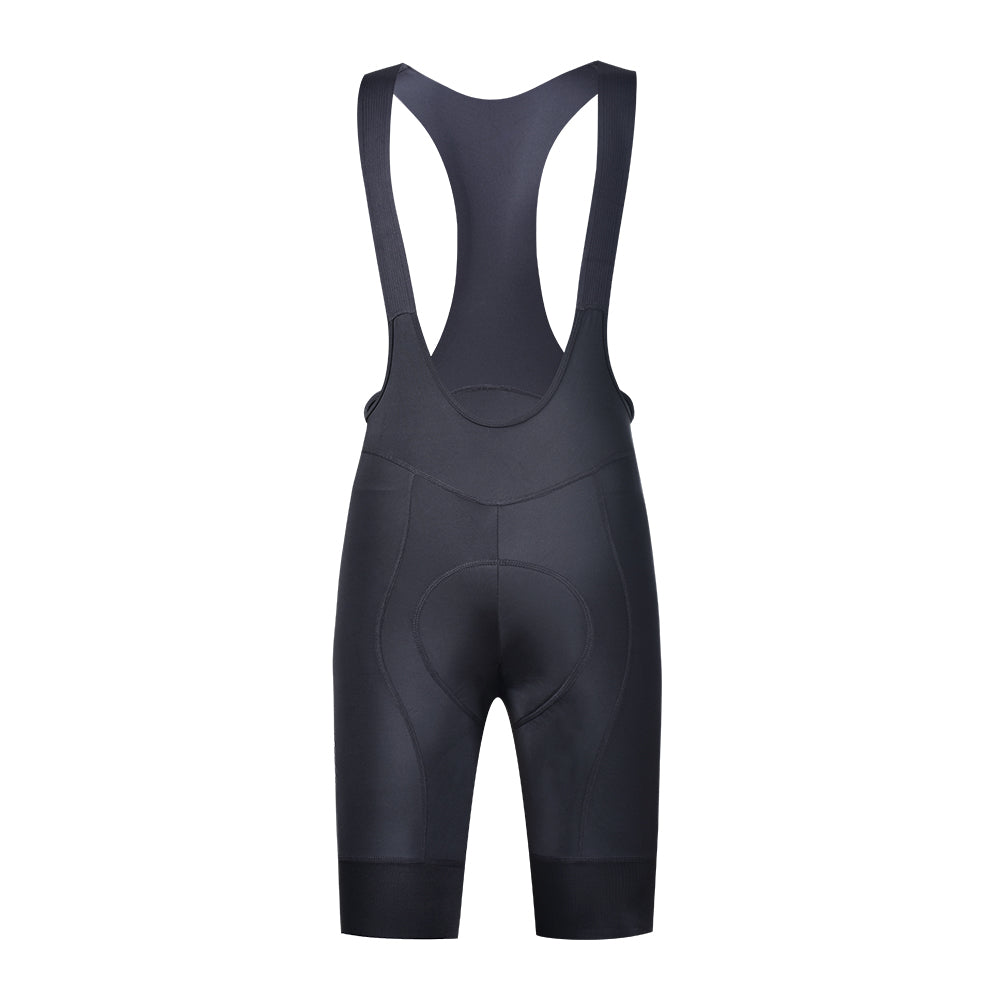
Padded Cycling Shorts Australia: What the Pad Actually Does
Every rider buying their first pair of padded cycling shorts asks the same question, usually while holding a pair in each hand: what am I actually paying for here? One pair is $60. The other is $180. They look almost identical.
The difference is almost entirely in the pad, and it's the one part of your kit you can't judge from a photo. Plenty of Australian riders find out the hard way, somewhere around the 50 kilometre mark.
What the pad in padded cycling shorts actually is
The pad is called a chamois, pronounced "shammy". The name is a leftover from when it was literally a piece of chamois leather sewn into wool shorts, which riders had to treat with cream after every wash to stop it going hard.
Modern chamois pads are multi-density foam, sometimes with gel inserts, covered in a fabric layer that sits against your skin. They're anatomically shaped rather than flat, and the shaping does more work than the thickness.
That's the first thing worth knowing: a thicker pad is not a better pad. Cheap padded cycling shorts often use one slab of uniform foam, and the thickness is there to disguise the fact that it isn't shaped for anything.
What the chamois is actually solving
Most people assume the pad is there for cushioning, like a seat cover. It isn't, or at least that's the smallest part of the job.
Your weight on a bike sits on two bones at the base of your pelvis, the ischial tuberosities, or sit bones. On a properly fitted saddle those bones carry the load, and the soft tissue between them should carry very little. A good chamois supports that arrangement, with denser foam under the sit bones and thinner, softer material in between.
The second job is friction. Over three hours you'll turn the pedals somewhere around 15,000 times, and every one of those rotations moves your leg against your body. Bare skin against a seam, or against fabric that's shifting around, will chafe. The chamois moves with you as one piece so nothing rubs.
The third job is moisture. Sweat sitting against skin under pressure is how saddle sores start. A good chamois pulls moisture away and dries fast.
Cushioning comes fourth. If your shorts feel comfortable in the shop and painful at 60 kilometres, the pad was built for the shop.
Padded shorts, bib shorts or knicks: what's the difference?
The terminology trips people up, particularly in Australia where the local word is different again. Knicks is simply the Australian word for cycling shorts, and it can mean either style below. Someone at a bunch ride who says they're buying new knicks might be talking about waistband shorts or bibs.
| Style | Pad stays put | Waist pressure | Toilet stops | Suits |
|---|---|---|---|---|
| Waistband padded shorts | Until the waistband slips | Yes, when you're bent over the bars | Quick | Short rides, indoor sessions, casual riding |
| Bib shorts | Yes, the straps hold it in place | None | Slower, the jersey has to come up | Anything over 90 minutes, bunch rides, long days |
Waistband shorts pull on like normal shorts, and the elastic waist is the weak spot: it digs in over the bars and slides down as the ride goes on. Bib shorts swap the waistband for straps over your shoulders, so nothing sits on your stomach and the pad stays exactly where it was positioned. Once riders try bibs, most don't go back.
The full comparison is in our guide to cycling knicks vs bib shorts. If you've already decided, browse men's cycling bib shorts or women's cycling bib shorts.
How to tell a good chamois from a cheap one
You can assess most of this in your hands before you ever ride in them.
Press into the pad in different places. It should feel firmer in the middle-rear, where your sit bones land, and softer towards the front. If the resistance is identical everywhere, it's a single-density pad and it will bottom out under load.
Look at the surface fabric. It should feel smooth and slightly stretchy, not like towelling. Terry-cloth style surfaces hold sweat.
Check the edges. The pad should taper to nothing at its perimeter. A pad with a hard cut edge creates a pressure line you'll feel after an hour.
Turn it inside out and look at the seams. Flatlock stitching lies flush. Raised overlocked seams sit against your skin at exactly the wrong place.
Check whether it's gendered. Male and female anatomy load a saddle differently, and a properly built range has separate pads rather than the same pad in a narrower short. We cover that in women's cycling shorts and what needs to be different.
Matching the pad to your ride
Ride length matters more than budget, and foam is why. It compresses over time, and once it's fully compressed it stops supporting anything. A cheap pad doesn't just feel average on a long ride, it gets progressively worse.
The Core Bib Shorts use a multi-density chamois with antibacterial properties, built for 6+ hours in the saddle. For most riders that covers the lot: commutes, training loops, club rides and long weekend days. They start at $119.99.
The Pinnacle Bib Shorts step up to an Elastic Interface® Paris HP chamois, thermal-moulded and rated for 7+ hours. Elastic Interface is an Italian pad specialist, and the Paris HP is their endurance model. Pinnacle also moves to a lighter second-skin compression fabric and laser-cut grippers. They start at $189.99, and they earn it for riders who stack long days back to back.
If you'd rather not load up your jersey pockets, the Cargo Bib Shorts add a mesh pocket on each thigh and a high-density multi-layer chamois.
Buying more pad than your riding needs is a harmless mistake. Buying less is the one that hurts.
Heat, sweat and Australian summers
A pad that copes with a 15 degree autumn morning can struggle on a 35 degree January afternoon. Sweat soaks the chamois faster than it can move moisture out, and a wet pad sitting under pressure is where heat rash and saddle sores begin.
Two habits fix most of it. Pick shorts with a quick-drying fabric against the skin, and get out of them promptly once you stop. If you're stopping for a café after a hot ride, a spare pair or at least a quick change makes a bigger difference than any cream. Our guide to preventing saddle sores covers what to do if they've already appeared.
Wearing and looking after padded cycling shorts
No underwear. None. Underwear seams sit directly under the pressure points the chamois was shaped to protect, and cotton holds sweat against your skin. It's the single most common reason a first-time rider decides padded shorts are uncomfortable.
Fit snugly. The shorts need to be close enough that the pad stays put underneath you. Any looseness and the pad shifts independently of your body, which is worse than no pad because now there's a moving object between you and the saddle. Leg grippers should hold without leaving a mark. If they're cutting in, size up. If the leg rides up your thigh, the gripper isn't holding.
Wash them properly. Cold wash, no fabric softener, hang to dry in the shade. Softener coats the pad fabric and the silicone grippers and wears them out quickly. The full routine is in our kit washing guide.
Use chamois cream if you want it. It's optional for most riders and genuinely useful past about three hours. See do you need chamois cream for the detail.
Our shorts follow a race cut, which means snug and close to the body in the riding position. If you'd prefer a bit more room on longer or more relaxed rides, sizing up one is a reasonable choice rather than a compromise. The size guide has the measurements, and our bib shorts buyer's guide goes deeper on fit.
Padded cycling shorts FAQ
Are padded cycling shorts the same as cycling knicks?
Yes. Knicks is the Australian word for cycling shorts, and it covers both waistband shorts and bib shorts. The pad inside is the same idea in both. The difference is how the shorts are held up.
Do you wear underwear under padded cycling shorts?
No. The chamois is made to sit against bare skin. Underwear adds seams and holds sweat exactly where the pad is trying to prevent friction.
How do I know when padded cycling shorts need replacing?
Look at the pad and the fabric. If the foam feels flat and doesn't spring back, the fabric has gone thin or shiny, or the grippers have lost their stretch and slide down, they've done their job. Washing without fabric softener makes them last longer.
Is a thicker pad more comfortable on long rides?
Not on its own. Shape and density zoning matter more than thickness. A thick, uniform pad compresses into a flat slab under load and can create friction between the pad and your skin. Pick a pad with firmer support under the sit bones and softer material in front of them.
Should I buy bib shorts or waistband padded shorts?
Bibs for almost any riding over 90 minutes. No waistband pressure, and the pad stays where it was positioned. Waistband shorts make sense for short rides, indoor sessions, or if quick toilet stops matter more than anything else.
Ready to buy? Start with the men's or women's range and pick the chamois for your longest regular ride. A cheap pad and a good pad are different experiences by kilometre 50, and padded cycling shorts are the one piece of kit where the price gap maps directly onto something you can feel.
Read more
A cycling gilet covers the gap between jersey and jacket. Here's the 5 to 15 degree range where it works, and why the mesh back matters most.

Women's cycling shorts in Australia need a female-specific chamois, not a resized men's pad. What differs, and how to get the fit right first time.