
Bib Tights vs Leg Warmers: Which Winter Setup Actually Wins
The winter leg question comes up every year around April. A rider's first proper cold ride leaves them with numb knees and a growing suspicion that their summer bib shorts aren't going to cut it much longer. Two obvious solutions: full-length bib tights, or leg warmers over the shorts they already own. Both work. One is usually the better choice for Australian conditions, and it isn't the one most riders buy first.
Here's what each option actually does, when each makes sense, and why the answer for most Australian riders isn't tights.
The cold legs problem
Cold legs on the bike aren't just uncomfortable. They're slow. Muscles don't fire properly when they're cold, knees get stiff, and an hour into a ride with bare legs in 8°C air you'll notice the effort feels harder than the numbers say it should.
The fix is simple: cover the legs. The harder question is how.
Standard summer bib shorts leave your legs exposed. Below 15°C that starts to bite. Below 12°C it works against you. Below 8°C, bare legs only make sense if the ride is short and flat. The two ways to solve it are thermal bib tights or leg warmers over your summer shorts, and each has a different best use.
Option A: cycling bib tights
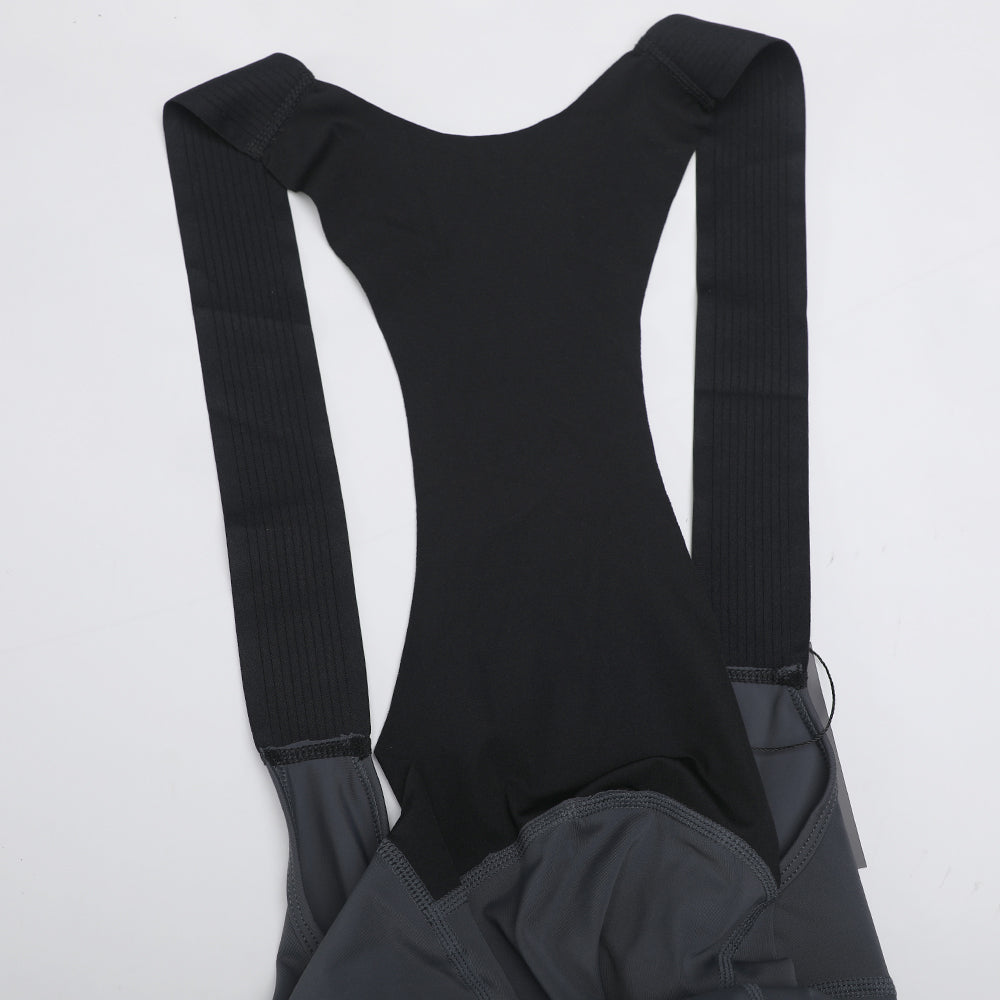
Bib tights are full length, integrated, and simple. One garment, chamois included, warm from waist to ankle. No layering to think about, nothing to fall down, nothing to lose out of a pocket.
The good version has a brushed thermal inner, windproof panels across the thighs and knees, and an endurance chamois built for long winter rides. The Thermal Bib is built to that pattern, with a race cut that doesn't bunch behind the knee.
Tights make sense when you're riding consistently cold conditions that stay under 10°C, when you're doing long rides where you won't warm up enough to strip layers, or when you're in Canberra, Tasmania or the alpine regions where winter mornings start properly cold. They also suit riders who just run cold, and anyone who'd rather not fiddle with kit mid-ride.
The trade-off is flexibility. Once they're on, getting them off mid-ride is a genuine hassle. A July day in Sydney that hits 20°C by noon turns bib tights into a sauna, and you'll need a separate setup for summer anyway since the chamois in a tight isn't the one in your summer bibs. They also cost considerably more than leg warmers.
Option B: bib shorts plus thermal leg warmers
The layering approach. Wear your regular summer bib shorts, the ones with the chamois you already know works. Pull thermal leg warmers up over them. Grippers at the thigh hold them in place, and the ankle sits inside your sock.
Thermal Leg Warmers give you roughly the same warmth as tights across the zones that matter, the quads, knees and calves, with one significant advantage: you can take them off mid-ride and keep going.
They suit variable conditions where the day warms up, which describes most Australian winter riding. They let you keep using your best bib shorts. They cost a fraction of what tights do. And they stay useful through late autumn and early spring, not just the coldest eight weeks.
The downsides are honest ones. Two pieces to manage instead of one. They can ride down if you size them wrong or the gripper gives out. And the waistband transition is never quite as warm as an integrated tight.
What about knee warmers?
Knee warmers are the shorter version of the same idea, covering the knee and a little above and below, stopping mid-calf or higher.
They exist because knees are the part that suffers first. Knee joints have less blood flow than the big muscles around them, so they get cold faster and stay cold longer. Plenty of riders find their quads are fine at 12°C while their knees ache.
In practice, most Australian riders are better served by full leg warmers than by a separate pair of knee warmers. The temperature band where knee warmers are enough but leg warmers are too much is narrow, and you can always push leg warmers down or take them off entirely if you overheat. Rather than buying both, a single pair of leg warmers covers the knee problem and the calf problem together.
The old rule about covering your knees below 15°C is worth taking seriously though, whichever way you do it. Cold knees on a long ride are the kind of thing you feel the next day.
The honest answer for most Australian riders
Most Australian winter rides swing 10 to 15 degrees between start and finish. 6am in Sydney in July is 8°C. By 10am it's 17°C. A ride that starts in bib tights ends with the rider quietly overheating and looking for somewhere to change.
Leg warmers handle that pattern better. You start warm, peel them off when the day catches up, tuck them in a jersey pocket, and finish in standard bib shorts with sun on your legs. One piece of kit, a much wider range of conditions.
Unless you're riding somewhere that stays genuinely cold all ride, leg warmers are the smarter default. Cheaper, more flexible, useful across more of the year.
Tights still have a legitimate place. Their best use is a specific one: long cold rides where the conditions don't change much. For the classic dawn patrol that turns into a café spin, leg warmers win.
What to look for in leg warmers
Not all leg warmers are equal. The cheap ones fail at the gripper within a season, or use fabric that isn't thermal enough to matter.
A brushed thermal inner. If the inside feels smooth, it isn't a real thermal piece. You want a soft brushed surface that traps warm air against the skin.
Proper technical fabric. Budget leg warmers use bulk polyester, which holds sweat and goes baggy at the knee after a season. Italian thermal fabrics, the kind used in higher-end kit, breathe properly on a climb without giving up warmth on the descent. This is the single biggest difference between a pair you keep for years and a pair you replace next winter.
Silicone thigh grippers. Wide bands that hold against the thigh without digging in. Narrow elastic fails faster and gets uncomfortable after an hour.
A zip or wide-stretch ankle. A zip means you can get them on and off with your shoes still on. Small detail, matters every single time.
Sizing that matches your shorts. Leg warmers should start where your bib shorts end, with a slight overlap. Too short leaves a cold gap at the thigh. Too long and they bunch at the calf.
What to look for in bib tights
If tights are the right call for your conditions, these are the features that earn their keep.
Windproof front panels. Thighs and knees take the brunt of wind chill. Without reinforced panels there, tights behave like a thick tracksuit rather than technical kit.
An endurance chamois. Winter rides often run longer than summer ones. The pad needs to match the ride length, not the one you'd wear on a 30-minute spin.
Brushed thermal inner throughout. The whole inner surface should feel soft. Budget tights sometimes skip the back of the leg, which leaves cold spots exactly where you don't want them.
High back, low front. Standard bib construction, for warmth and coverage without restricting your breathing.
Flatlock seams. Three hours in a tight will find any seam problem fast.
Running both
This isn't strictly either/or. Most year-round riders end up with both in the drawer: leg warmers for autumn, early spring and mild winter days, tights for the coldest stretch or long alpine rides.
You don't need both to start. Begin with leg warmers, because they cover more rides. Add tights when the specific use case turns up.
Where to go from here
The Thermal Leg Warmers are $59.99 in XS to 2XL, made from premium Italian thermal fabric with zip ankles and silicone grippers, and they run with any pair of summer bibs. The Thermal Bib Tights cover the colder end with an endurance chamois and windproof front panels.
Legs are only part of the picture. Winter cycling gloves matter more for bike control than most riders expect, and a cycling gilet handles the wind across your chest without cooking you on the climbs. Thermal arm warmers use the same Italian fabric as the leg warmers and follow the same logic up top. The complete range sits in gloves and warmers.
For the full layering picture, our winter cycling clothing guide covers how legs fit into a complete system. If you're working out which bib shorts pair best with leg warmers, start with the men's bib shorts and women's bib shorts ranges.
Most Australian winter riding is milder than riders expect. Dress for the middle of the ride, not the first ten minutes. Take the flexible setup unless you specifically need all-day warmth, and you'll reach for it more often than you'd think.
Read more
Australian winter is a funny beast on the bike. The forecast says 8 degrees at 6am but the sun comes up by 7:30 and you're suddenly overheating in a climb that had you shivering twenty minutes earl...
Winter cycling gloves in Australia sit in a narrow window. Here's the 5 to 12 degree range where they earn their place, and when to leave them home.